What to Wear for Hot Yoga: Complete Outfit Guide

What to Wear for Hot Yoga: A Complete Outfit Guide to Beat the Heat
Hot yoga is one of those workouts that sounds simple until you actually walk into the room. You have a yoga mat, a bottle of water, and perhaps a peaceful expression on your face. Five minutes later, you are wondering why you dressed like you were going for a winter walk.
Knowing what to wear for hot yoga can make a surprisingly big difference. The right outfit can help you move freely, manage sweat, feel comfortable during long holds, and stay focused instead of constantly pulling at your clothes. Hot yoga is usually practiced in a warm or hot room, and different studios use different temperatures and humidity levels. A recent systematic review of 43 studies found that hot-yoga sessions studied by researchers ranged from 30°C to 52°C, with sessions lasting roughly 20 to 90 minutes. (PubMed Central (PMC))
That does not mean every hot-yoga class feels like a tropical holiday. Thankfully, there is usually no palm tree involved.
The good news is that dressing for hot yoga does not have to be complicated. You generally want lightweight clothing that stays in place, allows your body to move naturally, and handles moisture well. In this guide, we will look at the best tops, pants, shorts, fabrics, layers, colours, underwear, accessories, and practical clothing choices for hot yoga. We will also talk about what to avoid, how to choose an outfit for your first class, and how a thoughtful yoga wardrobe can fit into a more conscious approach to clothing.
For readers interested in yoga-focused clothing, UMAHE WEAR offers dedicated collections including its Yoga Line, alongside tops and pants that can be explored when building a comfortable practice wardrobe.
Why Hot Yoga Clothing Is Different
Regular yoga gives you plenty of clothing choices. You can wear leggings, loose trousers, a soft T-shirt, or almost anything that allows you to stretch.
Hot yoga changes the equation.
The room itself becomes part of the workout. Heat makes you sweat more, and humidity can make it harder for sweat to evaporate from your skin. As a result, clothing that feels perfectly comfortable during a normal yoga class may suddenly feel heavy, sticky, or restrictive.
Research supports the idea that heat changes the body’s response to yoga. A recent systematic review found that a single hot-yoga session increases body temperature and heart rate compared with non-heated yoga, while the overall energetic demand may not be dramatically higher. (PubMed Central (PMC))
That distinction matters.
Hot yoga can feel much harder without necessarily burning dramatically more energy. In other words, sweating buckets does not automatically mean you have discovered a secret calorie-burning machine.
Heat, Sweat and Clothing
Sweating is one of the body’s main ways of managing heat. Clothing can either help that process or make it more uncomfortable.
The American College of Sports Medicine recommends lightweight, loose-fitting and moisture-wicking clothing for exercise in hot conditions. (ACSM)
For yoga, however, “loose” should not mean “flapping around like a curtain.”
You need enough freedom for movement, but you also need clothing that stays where it belongs during downward dog, twists, lunges and inversions.
That is why the best hot yoga outfit usually sits somewhere between fitted and relaxed.
The Best Fabrics for Hot Yoga
Fabric is one of the most important things to consider when choosing hot yoga clothes.
You do not necessarily need the most expensive technical fabric on the market. What matters is how the material behaves when your body gets warm and sweaty.
Moisture-Wicking Fabrics
Moisture-wicking fabrics are designed to move sweat away from the skin and spread it across the surface of the fabric so that it can evaporate more easily.
This can make a noticeable difference in a hot yoga class.
Nike’s current hot-yoga clothing guide also recommends moisture-wicking fabrics rather than heavy cotton for heated practice, explaining that cotton can absorb sweat and remain wet against the body. (Nike.com)
Look for clothing described as:
- Moisture-wicking
- Quick-drying
- Breathable
- Lightweight
- Sweat-managing
- Stretchable
These terms are more useful than simply choosing a garment because the label says “sportswear.”
What About Cotton?
Cotton is soft, familiar and comfortable, so it is easy to understand why people love it.
For a gentle yoga session in a cool room, cotton can be perfectly pleasant.
For hot yoga, however, a thick cotton T-shirt can absorb a lot of sweat and become heavier as the class continues.
Imagine starting your class wearing a clean T-shirt and finishing with what feels like a small wet towel attached to your body.
Not ideal.
That does not mean every cotton blend is automatically unsuitable. Fabric weight, construction, fit and the overall design all matter. But for intense heat, lightweight moisture-managing fabrics are usually the safer practical choice.
What Tops Should You Wear for Hot Yoga?
A good hot-yoga top should be comfortable, secure and breathable.
You do not want to spend half the class adjusting your shirt.
For many people, a fitted tank top works well because it leaves the shoulders and arms free. A lightweight sports top can also be a good choice, particularly if it is designed for movement.
You can explore UMAHE’s tops collection when looking for options that can become part of a yoga wardrobe.
Fitted Tops
A fitted top can work particularly well for hot yoga because it is less likely to fall over your face during forward folds.
It can also make movement easier because there is less excess fabric.
However, fitted does not mean extremely tight.
If the garment makes breathing feel restricted, digs into your shoulders, or leaves marks around your waist, it is probably too tight for a relaxing practice.
Tank Tops
Tank tops are a classic hot-yoga option.
They expose more of the upper body to the air and allow the shoulders to move freely.
Look for:
- Secure straps
- Comfortable arm openings
- Stretchy fabric
- A neckline that stays in place
- Enough coverage for your preferred poses
The last point is important because everyone’s comfort level is different.
The best yoga top is not necessarily the one that shows the most skin. It is the one you stop thinking about once class begins.
Should You Wear a Sports Bra?
For many women, a supportive sports bra is an important part of a hot-yoga outfit.
Hot yoga is not usually as high-impact as running or jumping workouts, so you may not need the strongest compression available.
A comfortable low- or medium-support option may be enough, depending on your body and the style of yoga you practice.
The most important factors are:
- Comfortable support
- Breathability
- Secure straps
- Soft seams
- No uncomfortable pressure
- Good coverage during movement
Again, the goal is simple: put it on and forget about it.
What Pants Are Best for Hot Yoga?
When choosing pants for hot yoga, think about three things: movement, sweat and fit.
Leggings are popular because they stay close to the body and do not get in the way during poses.
Lightweight yoga pants can also work well if you prefer a looser silhouette.
UMAHE’s pants collection can be another useful place to explore when putting together a yoga-focused wardrobe.
Full-Length Leggings
Full-length leggings offer coverage and can feel comfortable during stretching.
They can also reduce skin contact with a mat in some poses.
However, in a very hot room, some people may find full-length leggings warmer than shorts or shorter bottoms.
This is where personal preference matters.
Cropped Leggings
Cropped leggings can be a useful middle ground.
They offer more coverage than shorts while leaving the lower legs exposed.
For people who find full-length leggings too warm but prefer not to wear shorts, they can be an excellent option.
Shorts
Shorts are popular for very hot classes because they allow more skin to be exposed.
But there is one important detail: make sure they stay in place.
Loose shorts may move around during wide-legged poses, while very short shorts can become distracting.
A comfortable pair with a secure waistband is often the better choice.
How Tight Should Hot Yoga Clothes Be?
This is one of the most common questions, and the answer is surprisingly simple:
Your clothes should be close enough to stay in place but loose enough to let you breathe and move.
A good test is to perform a few basic movements before buying or wearing the outfit to class.
Try:
- Raising your arms above your head.
- Squatting.
- Folding forward.
- Sitting cross-legged.
- Twisting from side to side.
If the waistband rolls down, the top moves too much, or the fabric pulls across your shoulders, the outfit may not be right.
Remember, yoga has enough challenges already. Your leggings do not need to become another one.
Why Breathability Matters
Moisture management and breathability are related but not identical.
A fabric may move sweat away from your skin but still feel warm if the garment has poor airflow.
Breathable clothing allows heat and moisture to move away from the body more effectively.
This is particularly important in heated rooms where your body is already working harder to release heat.
The American College of Sports Medicine recommends lightweight, moisture-wicking clothing when exercising in hot environments. (ACSM)
Look at the Construction, Not Just the Fabric Name
Two garments can be made from similar materials but feel completely different.
The thickness of the fabric, stitching, seams, panels and overall design all influence comfort.
For hot yoga, avoid unnecessarily thick fabrics, heavy decorative elements and multiple layers that trap heat.
Simple often wins.
What Colours Are Best for Hot Yoga?
Colour is mostly a matter of preference, but there are a few practical considerations.
Dark colours can make sweat marks less visible, while lighter colours may feel visually fresher.
If you are attending a studio with bright lighting, choose colours you feel comfortable wearing under strong lights.
For a calmer yoga experience, many people prefer neutral, earthy or muted shades.
This fits naturally with the visual philosophy of UMAHE, whose website presents yoga and meditation clothing within a broader theme of conscious living, minimal design and awareness. (Umahe)
You can also explore UMAHE’s Earth Line if you are interested in clothing connected with a more natural, understated aesthetic.
What Should You Avoid Wearing to Hot Yoga?
Knowing what not to wear can save you from an uncomfortable first class.
Heavy Sweatshirts
A sweatshirt may be perfect for travelling to the studio.
It is usually not a great idea once the class starts.
Thick Cotton
As discussed earlier, heavy cotton can absorb sweat and remain wet.
That can make the garment feel heavy and uncomfortable.
Clothing With Rough Seams
Seams that are harmless during a normal day can become irritating when your skin is hot and sweaty.
Pay attention to waistbands, underarms and areas where fabric repeatedly rubs against the skin.
Very Loose Tops
Loose clothing may look comfortable, but it can become annoying during inversions and forward bends.
If your top repeatedly falls over your face, it is not exactly helping you find inner peace.
Clothing That Is Too Tight
On the opposite side, compression that feels excessive can make breathing and movement uncomfortable.
Yoga is not a competition to see who can survive in the smallest pair of leggings.
Do You Need Layers for Hot Yoga?
Yes, but mostly before and after class.
The walk to the studio may be cool. The yoga room may feel like midsummer.
A lightweight layer can be useful for travelling, warming up or cooling down after practice.
A soft shawl can also be useful before or after meditation and yoga, especially when the body cools down after exercise.
UMAHE also has a shawls collection that can be explored as part of a more versatile practice wardrobe.
The trick is to avoid wearing unnecessary layers once the heated session begins.
What Should You Wear to Your First Hot Yoga Class?
If you are new to hot yoga, do not overthink it.
A simple outfit is often best.
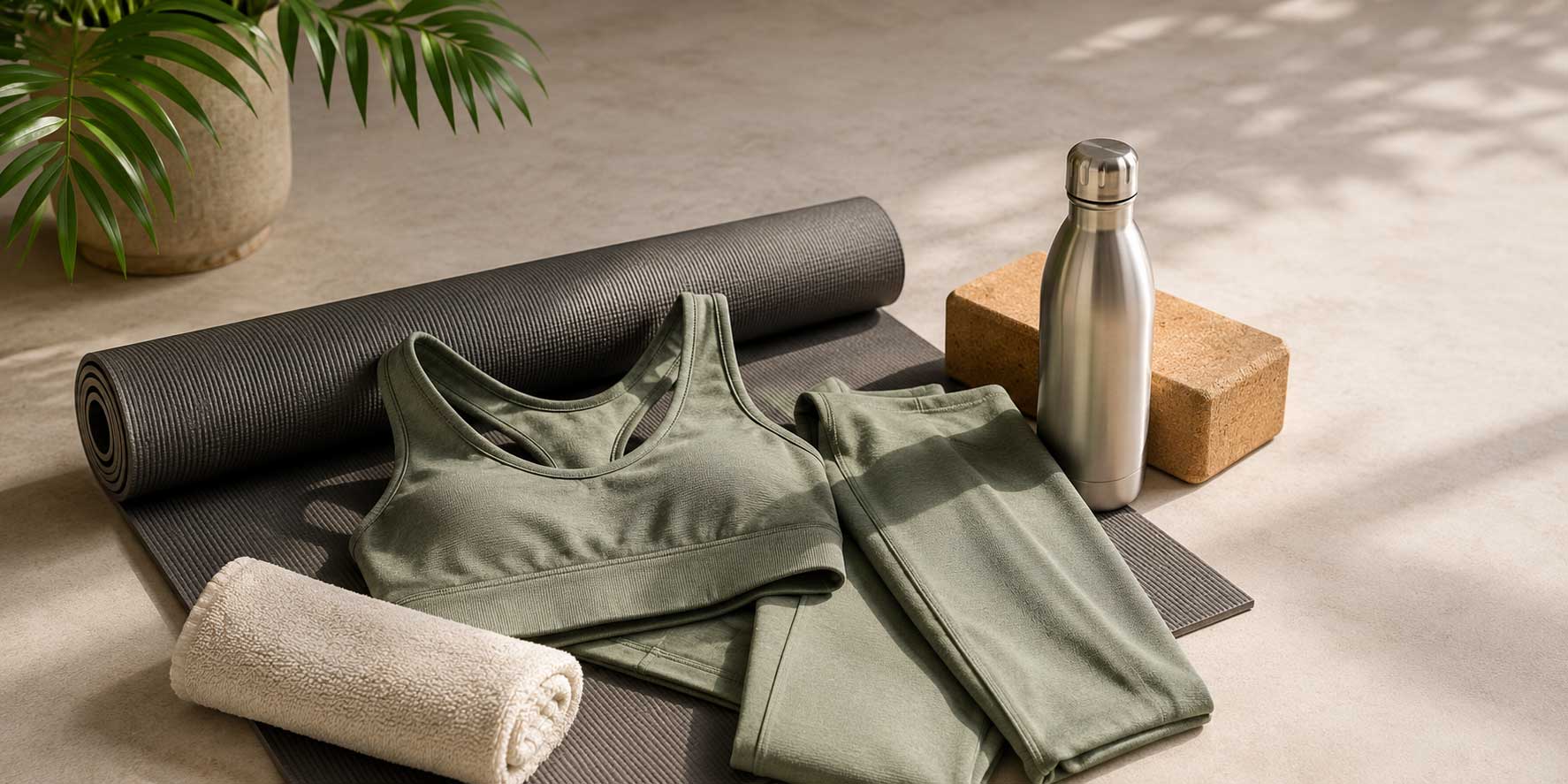
A good beginner combination could be:
- A lightweight fitted tank top
- Comfortable leggings or secure shorts
- A supportive sports bra if needed
- Moisture-wicking underwear
- A clean towel
- A water bottle
- A yoga mat with good grip
You do not need a wardrobe that looks like it belongs to a professional athlete.
You need clothes that let you concentrate on the practice.
Why a Good Grip Matters More Than You Think
Hot yoga means sweat.
Sweat means slippery hands and feet.
And slippery hands plus downward dog can create a surprisingly memorable experience.
Your clothing cannot solve every grip problem, but your overall setup matters. A suitable yoga mat and towel can help you feel more stable.
Nike’s hot-yoga guidance also recommends a grippy mat and a microfiber towel for managing sweat and reducing slipping during practice. (Nike.com)
Hydration Is Part of the Outfit Strategy
Technically, hydration is not clothing.
But when discussing what to wear for hot yoga, it would be strange to ignore it.
Hot environments increase sweat loss. The recent systematic review of hot yoga found that some studies reported sweat losses of around 1.5 litres during Bikram yoga sessions, although individual responses vary. (PubMed Central (PMC))
That is why your preparation should include water and sensible hydration.
The CDC advises people exercising in heat to drink more water than usual and not wait until they feel thirsty. It also recommends stopping activity and moving to a cool place if you feel faint or weak. (CDC)
Hot yoga should challenge you, not turn you into a human raisin.
Is Hot Yoga Actually More Effective Than Regular Yoga?
This is where the science becomes interesting.
Hot yoga certainly feels more intense.
But feeling hotter does not automatically mean that the exercise burns dramatically more calories or produces every possible health benefit.
A 2025 systematic review covering 43 studies and 942 participants found that hot yoga raises body temperature and heart rate during a session, but does not appear to increase energy demands substantially compared with non-heated yoga. The review also found promising evidence for improvements in areas such as flexibility, balance and some cardiometabolic measures with repeated practice, while emphasizing that stronger research is still needed. (PubMed Central (PMC))
That is an important distinction.
Hot yoga may have benefits, but “more sweat” should never be treated as proof of “more health.”
A previous controlled study involving 16 experienced yoga practitioners compared a one-hour Bikram session at about 40°C with yoga at about 23°C. Researchers found similar overall energy expenditure and oxygen consumption between conditions, although some differences in hip range of motion and fuel use were observed. (PubMed)
So if you love hot yoga, wonderful.
If you prefer regular-temperature yoga, that is also completely fine.
The best exercise is usually the one you can practice consistently and safely.
Safety Comes Before Style
Clothing can improve comfort, but it cannot eliminate the risks associated with exercising in high heat.
Heat-related illness can become serious.
The American College of Sports Medicine describes exertional heat stroke as a medical emergency and emphasizes early recognition, stopping activity and rapid cooling when serious heat illness occurs. (PubMed)
During hot yoga, pay attention to warning signs such as:
- Dizziness
- Unusual weakness
- Confusion
- Nausea
- Feeling faint
- Severe headache
- Unusual shortness of breath
- Loss of coordination
If something feels seriously wrong, stop.
There is no medal for finishing a yoga class while your body is telling you to leave.
The CDC similarly advises people exercising in heat to stop activity and move somewhere cool if they feel faint or weak. (CDC)
Who Should Be Especially Careful?
Hot yoga is not suitable for everyone.
For example, the American College of Obstetricians and Gynecologists advises pregnant people to avoid hot yoga and hot Pilates because of the risk of overheating. (ACOG)
People with certain medical conditions should also discuss exercise in heat with a qualified healthcare professional before beginning.
This is not about being overly cautious. Heat changes how the cardiovascular system and body temperature regulation respond to exercise.
How UMAHE Fits Into a Thoughtful Yoga Wardrobe
Clothing for yoga does not need to be complicated.
The best pieces often have a quiet quality: they move when you move, stay where they should, and do not constantly demand your attention.
That idea fits naturally with UMAHE’s broader approach. The brand describes itself through themes such as awareness, conscious clothing, minimal design and a connection between movement and everyday life. (Umahe)
For someone building a yoga wardrobe, the UMAHE Yoga Line is the most direct place to explore the brand’s yoga-focused selection.
You can also browse tops and pants according to the type of outfit you prefer.
For readers interested in the philosophy behind the brand, the UMAHE About Us page provides additional information about the company.
And if you want to keep exploring practical ideas about yoga, clothing and conscious living, the UMAHE Journal is the natural place to continue.
A Simple Hot Yoga Outfit Checklist
Before leaving for class, ask yourself:
- Is my outfit lightweight?
- Can I move freely?
- Will my top stay in place?
- Is my waistband comfortable?
- Can the fabric handle sweat?
- Are there seams that may rub?
- Do I have enough support?
- Do I have a towel?
- Do I have water?
- Is the clothing appropriate for the studio’s rules?
If the answer is yes, you are probably ready.
There is no need to turn getting dressed into a 45-minute meditation session.
How to Build a Small but Useful Yoga Wardrobe
You do not need ten identical pairs of leggings.
A small collection can be much more practical.
For example, you might keep:
Two or Three Yoga Tops
Choose different weights or cuts depending on the studio temperature and your preference.
Two or Three Bottoms
Leggings, cropped pants or shorts give you options for different levels of heat.
One Lightweight Layer
Useful for travelling to and from class.
One Comfortable Shawl
Useful for relaxation, meditation and cooling down.
A Few Reliable Accessories
A towel, water bottle and suitable yoga mat can be more useful than another fashionable top.
The goal is not to own more clothing.
It is to own clothing that earns its place.
Caring for Hot Yoga Clothes
Hot yoga clothing works hard.
Sweat, frequent washing and stretching can all affect fabric over time.
Wash sweaty clothes soon after class rather than leaving them inside a closed gym bag for several days.
Follow the garment’s washing instructions.
Avoid unnecessarily high heat when the care label recommends cooler washing.
Do not use excessive fabric softener on technical fabrics unless the manufacturer specifically recommends it, because it may affect the performance of some moisture-managing materials.
And, perhaps most importantly, let your clothes dry completely before storing them.
Your yoga bag is not a spa.
Frequently Asked Questions
What is the best thing to wear to hot yoga?
A lightweight, breathable and moisture-managing outfit is usually a good choice. Many people prefer a fitted tank top with leggings, cropped pants or secure shorts.
Are leggings too hot for hot yoga?
Not necessarily. Lightweight leggings can work very well, especially if they are breathable and designed for movement. However, some people prefer shorts or cropped leggings in very hot rooms.
Is cotton good for hot yoga?
Lightweight cotton may be comfortable for some people, but it can absorb sweat and remain wet. Moisture-wicking fabrics are often more practical for heated classes. (Nike.com)
Should hot yoga clothes be tight?
They should generally be secure without restricting breathing or movement. Clothing that constantly rolls, slips or digs into the skin is usually a poor choice.
Can I wear a loose T-shirt?
You can, but it may move around during forward bends and inversions. A fitted or semi-fitted top is often more convenient.
Do I need special clothes for hot yoga?
Not necessarily. You do not need expensive specialist clothing. The important qualities are comfort, secure fit, breathability, freedom of movement and sensible moisture management.
Is hot yoga safe?
Hot yoga can be appropriate for many healthy adults, but heat adds physiological stress. Hydration, gradual adaptation and attention to warning signs are important. People with certain health conditions or pregnancy should seek professional guidance, and hot yoga is specifically advised against during pregnancy by ACOG. (ACOG)
Final Thoughts
Knowing what to wear for hot yoga is really about one simple goal: removing distractions so you can focus on your practice.
Choose lightweight and breathable clothing that moves with you. Look for comfortable support, a secure fit and fabrics that handle sweat well. Avoid heavy layers, uncomfortable seams and anything that needs constant adjusting.
The science also gives us a useful reality check. Hot yoga can raise heart rate and body temperature, and repeated practice may offer several promising health and functional benefits, but current research does not prove that hot yoga is automatically better than regular yoga. (PubMed Central (PMC))
Most importantly, listen to your body. Heat should be respected, not treated as a test of toughness.
For people looking for clothing that connects yoga, movement and a more conscious approach to everyday life, UMAHE WEAR offers dedicated yoga, meditation and lifestyle collections that can become part of a thoughtful practice wardrobe. Explore the Yoga Line, browse tops and pants, or learn more about the brand through UMAHE’s About Us page.
In the end, the perfect hot-yoga outfit is not the one that looks impressive in the studio mirror. It is the one that lets you breathe, stretch, sweat, move and forget about your clothes entirely.
References
- Hot Yoga: A Systematic Review of the Physiological, Functional and Psychological Responses and Adaptations – Sports Medicine – Open
- Hot Yoga: A Systematic Review – PubMed
- Objective and Subjective Measures of Exercise Intensity During Thermo-Neutral and Hot Yoga – PubMed
- Acute Physiologic Effects of Performing Yoga in the Heat – PubMed
- Cardiovascular, Cellular, and Neural Adaptations to Hot Yoga – PubMed
- ACSM Information on Exercising in Hot and Cold Environments
- ACSM Expert Consensus Statement on Exertional Heat Illness
- CDC – Heat and Athletes
- ACOG – Exercise During Pregnancy
- Google Search Central – Creating Helpful, Reliable, People-First Content
- Nike – Best Clothing for Hot Yoga