Winter Yoga Essentials: The Best Layering Pieces for Cold-Weather Practice

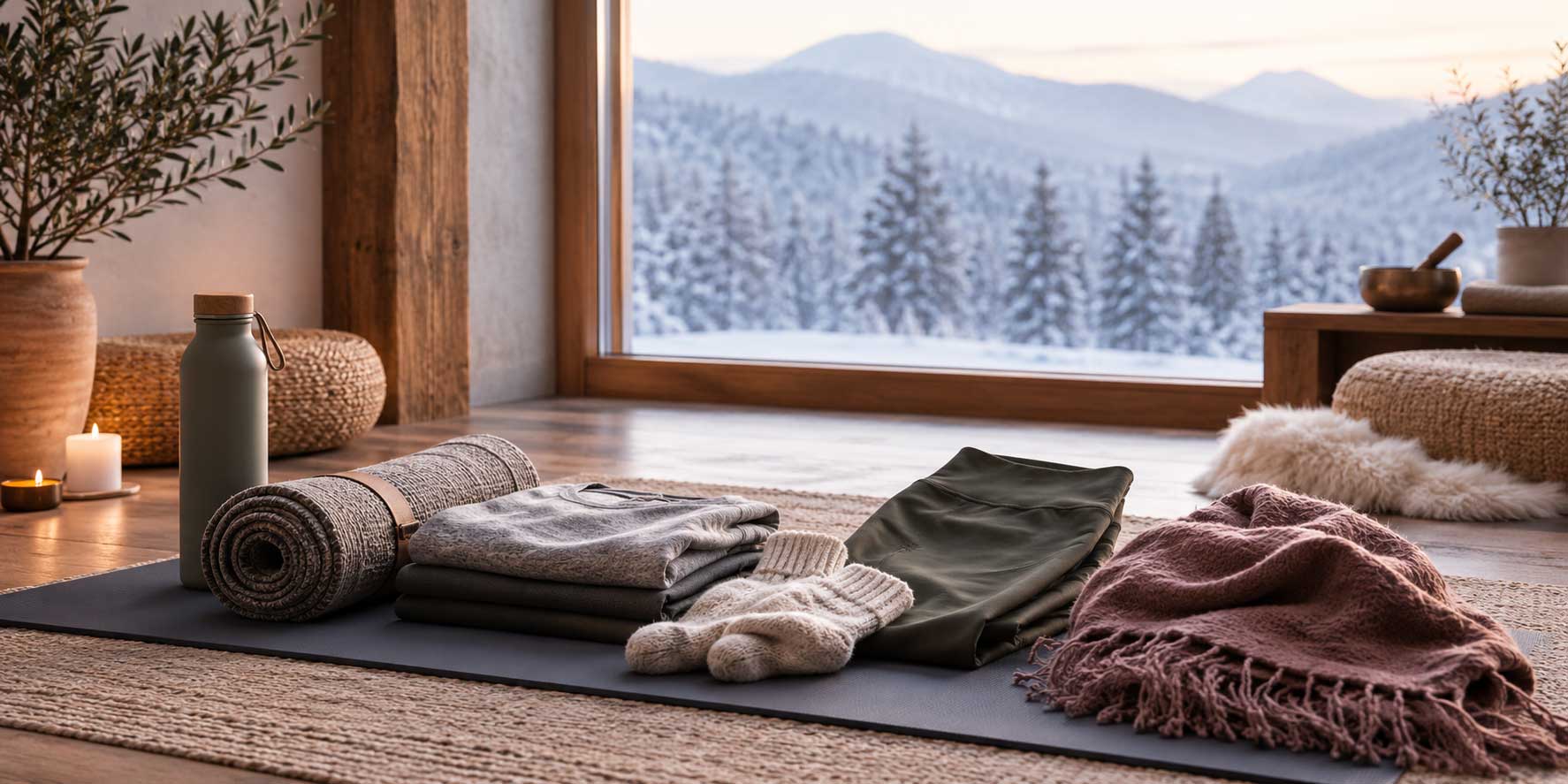
Winter has a funny way of testing our commitment to healthy habits. In summer, getting onto a yoga mat can feel like the easiest decision in the world. In winter, however, the bed suddenly becomes extremely persuasive. The alarm rings, the room is cold, and the thought of leaving a warm blanket for a yoga session feels almost unreasonable. This is exactly where Winter Yoga Essentials become important. The right clothing layers can make a cold-weather yoga practice more comfortable, flexible, and enjoyable without turning your outfit into a pile of heavy winter clothes.
For many people, winter yoga is not about wearing the thickest clothes possible. It is about finding the right balance between warmth, movement, breathability, and comfort. During a yoga session, your body gradually produces more heat. A layer that feels perfect during the first five minutes may feel far too warm once you begin moving. On the other hand, wearing too little can leave your muscles feeling cold before your practice even begins.
This guide explains how to dress for yoga in cold weather, which layers are most useful, what fabrics to consider, how to avoid overheating, and how to build a practical winter yoga wardrobe. We will also look at what recent research says about exercise, clothing, thermoregulation, and yoga itself.
For people looking for clothing that fits a mindful, minimal approach to movement, UMAHE WEAR is also worth exploring. The brand presents itself around conscious clothing, minimal design, sustainability, and a slower relationship with everyday life. Its collections include yoga, meditation, earth-inspired pieces, tops, pants, and shawls. UMAHE WEAR
Why Winter Yoga Needs a Different Approach
Yoga is often associated with warm studios, bare feet, lightweight leggings, and sleeveless tops. That image makes sense in a heated studio, but it does not tell the whole story.
A winter yoga session can happen in a home with a chilly floor, in an unheated room, in a studio where temperatures vary, or even outdoors in certain climates. Each situation creates a different clothing challenge.
The main problem is that your body does not stay at the same temperature throughout the session.
At the beginning, you may feel cold. After several minutes of movement, your body starts generating heat. During more active sequences, you may sweat. Then, during slower poses, meditation, breathing exercises, or Savasana, your body may cool down again.
So the ideal winter yoga outfit needs to adapt with you.
Research on clothing and exercise has long shown that clothing affects how heat and moisture move between the body and the environment. In cold conditions, clothing provides insulation, but exercise itself increases heat production. This creates a balancing act: you need enough clothing to stay warm, but not so much that you trap excessive heat and sweat. (PubMed)
That is why layering is usually more useful than simply wearing one extremely thick garment.
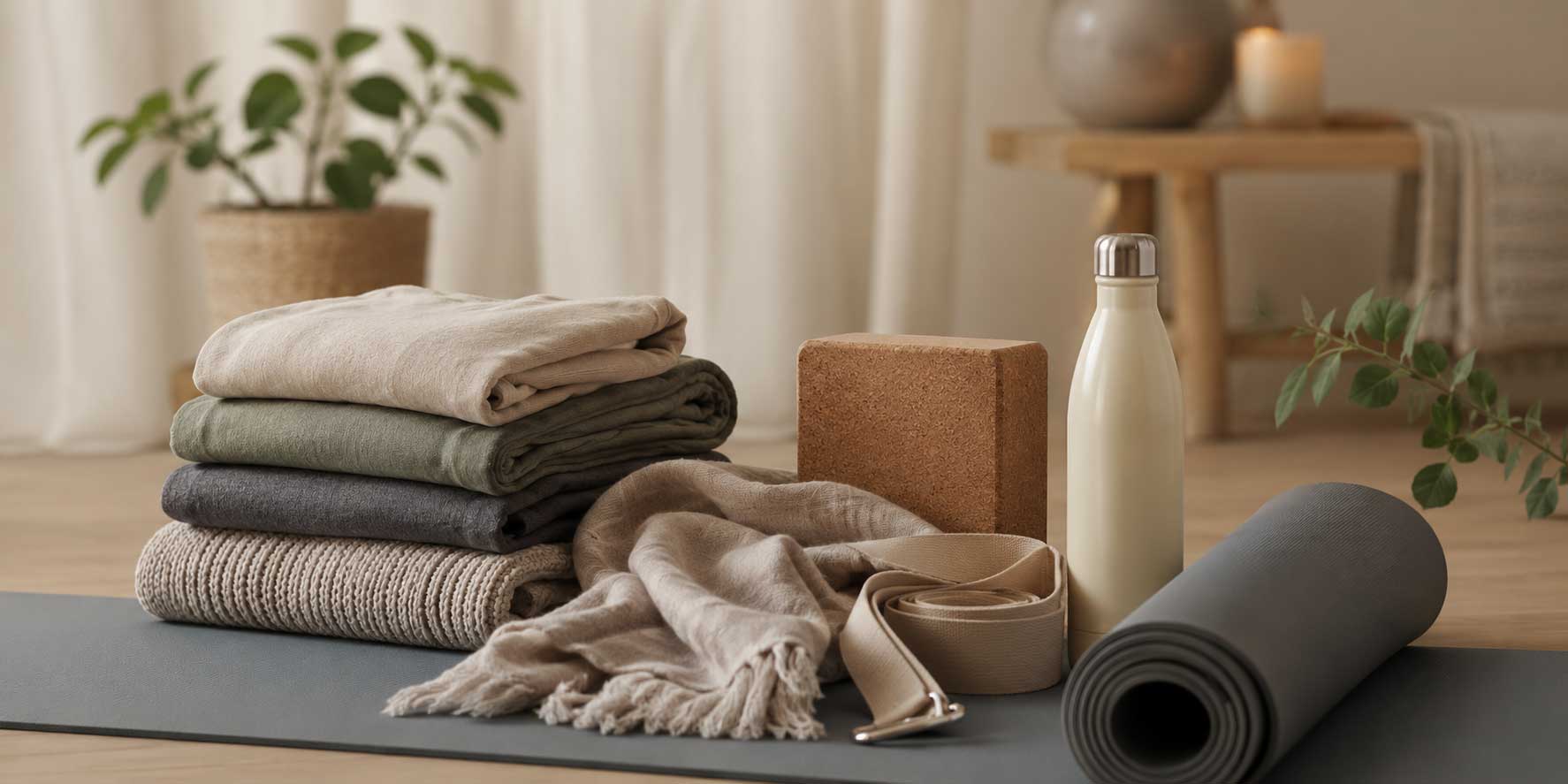
The Three-Layer Idea for Winter Yoga
One of the simplest ways to understand winter yoga clothing is to think in layers.
You do not necessarily need three layers every time. If your room is only slightly cool, two may be enough. If you are practicing in a genuinely cold environment, three layers can give you more flexibility.
Base Layer: Keep Sweat Away From Your Skin
The first layer sits directly against your body.
Its main job is not simply to make you warm. It should also help manage moisture.
During yoga, even a relatively gentle sequence can make you warm. Sun Salutations, standing poses, lunges, flowing transitions, and repeated movements can gradually increase body temperature.
A good base layer should therefore feel comfortable against the skin and allow moisture to move away from the body.
Research on exercise clothing suggests that moisture management becomes particularly important because sweat trapped against the skin can contribute to discomfort and cooling when activity slows down. (PubMed)
For winter yoga, useful base-layer characteristics include:
- Lightweight construction
- Comfortable stretch
- Good moisture management
- Soft feel against the skin
- Enough flexibility for deep movement
- A close but not restrictive fit
A long-sleeve yoga top can be particularly useful during the first part of a winter session.
Once your body warms up, you may decide to remove it.
Mid Layer: The Warmth Layer
The second layer is where you add insulation.
This could be a lightweight sweatshirt, fleece-style layer, warm knit, soft pullover, or another breathable garment.
The key word is lightweight.
Remember, you are doing yoga, not preparing to spend three hours standing beside a frozen lake.
The mid layer should provide warmth while allowing your arms, shoulders, and torso to move freely.
Research examining layered clothing during exercise in cold environments has found that layering can change thermal comfort and skin temperature, while the exact effect depends on the clothing system and activity. (PubMed)
For yoga, the mid layer should ideally be easy to remove.
That makes a loose but not oversized top particularly practical.
Outer Layer: Protection Before and After Practice
If you are walking to the studio, traveling outdoors, or practicing somewhere exposed to cold air, an outer layer becomes useful.
This might be a lightweight jacket, coat, wrap, or shawl.
Its role is different from the base layer.
Instead of managing sweat directly, the outer layer protects you from the environment.
Wind, cold air, rain, and snow can quickly make a warm body feel cold.
Harvard Health recommends a three-part layering system for cold-weather activity: a moisture-managing first layer, an insulating middle layer, and an outer layer that helps protect against wind and precipitation. (Harvard Health)
For yoga, however, the outer layer usually belongs more to your journey before and after practice than to the active part of the session.
What Should You Wear During the First 10 Minutes?
The first few minutes are often the trickiest.
Your body has not warmed up yet, so you may feel colder than you will later.
This does not necessarily mean you need a thick outfit for the entire class.
Instead, begin with an additional lightweight layer.
For example:
- Long-sleeve yoga top
- Lightweight yoga pants
- Optional warm wrap or shawl
- Socks during gentle warm-up movements
As your body temperature rises, remove the extra layer.
This approach is much more practical than wearing a thick sweater and discovering halfway through your first flow that you have essentially turned yourself into a human radiator.
The ability to add and remove clothing is one of the main advantages of layering.
Harvard Health similarly recommends removable layers because people generate more heat as they move. (Harvard Health)
Best Winter Yoga Tops
A good winter yoga top needs to do several jobs at once.
It should provide warmth without restricting movement. It should feel comfortable around the neck and shoulders. It should also work well during poses where the arms move overhead.
Long-Sleeve Yoga Tops
Long-sleeve tops are among the most practical winter yoga essentials.
They offer more coverage than a tank top while remaining relatively lightweight.
They are especially useful for:
- Gentle yoga
- Restorative yoga
- Morning yoga
- Meditation
- Cool rooms
- Warm-up periods
A fitted or semi-fitted long-sleeve top can also work well under a looser layer.
UMAHE’s tops collection can be considered when building a simple wardrobe around versatile tops.
Loose Layers
Loose tops can feel especially comfortable during slower practices.
They can also create a more relaxed silhouette and work well beyond the yoga studio.
However, avoid excessively oversized clothing during active yoga.
A sleeve that constantly falls over your hands may become less “mindful movement” and more “where did my sleeve go?”
The goal is relaxed movement without constant adjustment.
Best Winter Yoga Pants
Legwear is just as important as your upper layers.
Your legs need warmth, but they also need freedom.
Yoga pants should allow you to bend your knees, move your hips, extend your legs, and transition between poses without pulling uncomfortably.
UMAHE’s pants collection provides another internal destination for readers interested in exploring the brand’s approach to movement-friendly clothing.
Leggings
Leggings are a classic option because they remain close to the body.
This can make it easier to move through poses without excess fabric getting in the way.
For colder conditions, slightly heavier leggings may provide more comfort than very thin summer styles.
Relaxed Yoga Pants
For meditation, gentle yoga, breathwork, or slower practices, relaxed pants can be an excellent alternative.
They can also be useful before and after class when you want something comfortable rather than highly fitted.
The best choice ultimately depends on your practice style.
A fast Vinyasa session and a 45-minute meditation session do not have the same clothing requirements.
What About Shawls and Wraps?
This is where winter yoga becomes especially interesting.
A shawl or wrap is not necessarily something you need while moving through every pose. However, it can become extremely useful before class, during meditation, and especially during Savasana.
When the body becomes still, heat production decreases.
That is one reason people often suddenly notice how cold they are during the final relaxation.
A lightweight shawl can provide warmth without requiring you to wear a heavy sweater throughout the entire class.
UMAHE’s shawls collection is therefore particularly relevant to a winter yoga wardrobe.
A shawl can also serve a practical purpose beyond yoga. It can become a travel layer, reading wrap, meditation companion, or simply something to keep nearby when the room feels cooler than expected.
Why Fabric Matters in Winter
The label on a garment can tell you what a fabric is called, but what matters most is how the finished garment behaves.
For winter yoga, consider four basic characteristics:
- Warmth
- Breathability
- Moisture management
- Freedom of movement
No single fabric is automatically perfect for everyone.
Research into clothing and thermoregulation shows that the relationship between fabric, layering, exercise intensity, air movement, moisture, and thermal comfort is complicated. In other words, there is no magic fabric that wins every winter situation. (PubMed)
Natural Fibres
Wool and wool blends are often appreciated for warmth and comfort.
They can work particularly well in outer or insulating layers.
However, the exact fabric construction matters more than simply seeing the word “wool” on a label.
Synthetic Performance Fabrics
Synthetic fabrics are commonly used in activewear because they can be engineered for stretch, moisture movement, durability, and light weight.
For more active winter yoga, these characteristics can be useful.
Cotton
Cotton can feel wonderfully soft.
But for active winter exercise, it has a limitation: once it becomes wet with sweat, it may stay damp longer than fabrics designed specifically for moisture management.
Harvard Health and Hospital for Special Surgery both recommend avoiding cotton directly against the skin during cold-weather exercise because wet clothing can increase discomfort and cooling. (Harvard Health)
That does not mean cotton is forbidden.
It simply means you should think about when and how you use it.
A cotton layer that feels lovely during quiet meditation is a different situation from a cotton shirt worn directly against the skin during an intense winter workout.
The Importance of Breathability
Warmth is only half the equation.
Breathability matters because your body produces heat during movement.
Imagine wearing a winter coat while doing 30 minutes of fast Sun Salutations.
You might begin the session feeling wonderfully warm.
Ten minutes later, you might feel like you have accidentally joined a sauna.
The better approach is to use garments that allow you to regulate your temperature.
This is another reason removable layers are so useful.
Scientific research on clothing during exercise supports the idea that clothing creates a barrier to heat and moisture transfer. The balance becomes particularly important as exercise intensity changes. (PubMed)
Winter Yoga and the Warm-Up
A winter yoga session should not begin with your hardest pose.
When your body is cold, give yourself time to transition.
You might begin with:
- Gentle breathing
- Shoulder circles
- Neck movements
- Cat-Cow
- Slow spinal movements
- Gentle hip mobility
- Easy standing movements
Then gradually increase intensity.
Recent research continues to examine warm-up practices and injury outcomes, including a 2026 study using data from more than 6,000 athletes with previous sports injuries. While that research was not specifically about yoga, it adds to the broader discussion around preparation before physical activity. (PubMed)
For yoga, the practical message is simple: ease into the practice rather than asking your cold body to perform at full speed immediately.
Why Savasana Can Feel So Cold in Winter
Savasana has a reputation for being peaceful.
In winter, it can also have a second reputation: unexpectedly chilly.
After active movement, you lie still. Your muscles are no longer producing as much heat. The room may feel cooler than it did during movement.
This is where an extra layer can make a significant difference.
Keep a shawl, light blanket, or warm outer layer nearby.
You do not need to suffer through Savasana to prove that you are committed to yoga.
Comfort is not cheating.
Winter Yoga Essentials for Different Types of Practice
Not everyone practices yoga in the same way.
Your ideal clothing combination should reflect your practice.
For Vinyasa or Flow Yoga
Choose:
- Breathable base layer
- Flexible yoga pants
- Lightweight long-sleeve top
- Optional removable layer
The focus should be on mobility and moisture management.
For Hatha Yoga
Hatha practices can vary considerably in intensity.
A lightweight long-sleeve top may be useful at the beginning, with an extra layer available for slower sections.
For Restorative Yoga
Warmth becomes more important.
Consider:
- Soft pants
- Long-sleeve top
- Shawl
- Additional warm layer
You are spending more time still, so you may cool down more easily.
For Meditation
Meditation requires very little physical movement, so warmth becomes one of the main clothing priorities.
The UMAHE Meditation Line can be particularly relevant for people looking for clothing associated with slower, quieter practices.
For Outdoor Yoga
Outdoor winter yoga requires more planning.
You need to consider:
- Air temperature
- Wind
- Ground temperature
- Moisture
- Snow or rain
- Sun exposure
- Duration of the session
Outdoor conditions can change quickly, so removable layers become even more valuable.
Does Yoga Still Matter During Winter?
Absolutely.
The cold season is not a reason to abandon movement.
According to the World Health Organization, adults should generally aim for at least 150 minutes of moderate physical activity per week, or an equivalent amount of more vigorous activity. Muscle-strengthening activities are also recommended on at least two days per week. (World Health Organization)
Yet the latest WHO data also show a major global challenge: about 31% of adults worldwide, approximately 1.8 billion people, did not meet recommended physical activity levels in 2022. If the trend continues, inactivity could reach around 35% by 2030. (World Health Organization)
This is one reason maintaining an enjoyable winter routine matters.
If comfortable clothing makes it easier to step onto the mat, that is not a superficial benefit. It can help remove one small barrier between intention and action.
And sometimes that small barrier is surprisingly powerful.
What Recent Yoga Research Says
Yoga is not simply a fashion trend from a wellness advertisement.
Researchers continue to study its possible effects on physical and mental health.
A 2025 systematic review examined randomized controlled trials involving yoga, balance, falls, and bone metabolism in healthy people. The researchers noted that yoga has been investigated in relation to balance and physical function, although the evidence varies depending on the outcome and study design. (PubMed)
Another recent systematic review examined how yoga interventions have been designed and described in mental-health research. It reviewed 129 randomized controlled trials published between 2013 and 2024 and highlighted the growing but still varied research base around yoga, wellbeing, and mental health. (PubMed)
A 2024 systematic review and meta-analysis also examined yoga in relation to depressive disorders. The results contribute to a growing research literature, while also showing why yoga should be viewed as a complementary practice rather than a universal replacement for medical care. (PubMed)
The important point is not that yoga magically fixes everything.
It does not.
The more reasonable interpretation is that yoga can be one useful part of a broader healthy lifestyle.
Winter Yoga Clothing: What to Avoid
Sometimes knowing what not to wear is just as useful.
Avoid Excessively Heavy Clothing
Heavy clothing can make movement uncomfortable and cause overheating.
Avoid Clothing That Restricts the Shoulders
Your shoulders need freedom for poses such as Downward-Facing Dog, Warrior variations, and overhead movements.
Avoid Very Loose Sleeves During Active Practice
They can fall toward your hands or face and become annoying.
Avoid Wet Clothing
If you sweat heavily, consider removing or changing damp layers.
Avoid Dressing for the Entire Session Based Only on the First Five Minutes
This is a classic winter mistake.
You feel cold, so you add another layer.
Then you start moving.
Five minutes later, you regret every decision you have ever made.
Layering solves this problem more elegantly.
A Simple Winter Yoga Outfit Formula
If you want something easy, start with this formula:
For a cool indoor room:
Light long-sleeve top + flexible yoga pants.
For a colder room:
Moisture-managing base layer + yoga pants + removable warm top.
For restorative yoga:
Soft base layer + comfortable pants + shawl or warm wrap.
For outdoor winter yoga:
Moisture-managing base layer + insulating layer + protective outer layer.
For meditation:
Comfortable pants + warm top + shawl or wrap.
The exact combination should change with temperature, wind, activity level, and personal comfort.
How to Build a Small Winter Yoga Wardrobe
You do not need twenty different outfits.
A practical wardrobe might include:
- Two or three comfortable yoga tops
- One or two long-sleeve layers
- Two pairs of flexible pants
- One warm mid-layer
- One shawl or wrap
- One outer layer for outdoor travel
UMAHE organizes its clothing around several categories, including Yoga Line, Meditation Line and Earth Line.
That kind of category-based approach can make it easier to build a wardrobe around activities rather than buying random pieces that happen to look good on a product page.
Sustainability and the Idea of Buying Less
Winter clothing can quickly become a shopping rabbit hole.
One warm top becomes two.
Two become five.
Then somehow there is a chair in the bedroom that has not been seen since October because it is carrying your entire winter wardrobe.
A more thoughtful approach is to choose versatile pieces that can serve more than one purpose.
A good yoga top can also work for:
- Meditation
- Walking
- Travel
- Relaxing at home
- Everyday layering
This is particularly relevant to UMAHE’s stated emphasis on conscious clothing, transparency, responsible manufacturing, and minimal design. (Umahe)
For more information about the brand’s philosophy, readers can visit the UMAHE About Us page.
A Practical Winter Yoga Checklist
Before leaving for class, ask yourself:
- Is the room cold?
- Will I become warm after 10–15 minutes?
- Can I remove a layer easily?
- Is my base layer comfortable against my skin?
- Can I move my shoulders freely?
- Are my pants flexible enough for deep poses?
- Do I have something warm for Savasana?
- Will I be walking outdoors before or after class?
- Is the ground cold?
- Do I need a shawl or wrap?
If the answer to most of these questions is yes, your winter setup is probably on the right track.
When Cold Weather Requires Extra Caution
Cold-weather exercise is generally safe for many healthy adults, but not everyone responds to cold in the same way.
People with certain medical conditions, including asthma, heart problems, or circulation-related conditions, may need additional precautions.
Harvard Health recommends extra care for people with certain health conditions and emphasizes appropriate clothing, gradual activity, and attention to warning signs. (Harvard Health)
Cold and dry air can also be uncomfortable for people whose airways are sensitive.
If exercise in cold conditions causes unusual chest pain, severe shortness of breath, dizziness, confusion, or other concerning symptoms, stop the activity and seek appropriate medical help.
Clothing can improve comfort and temperature management, but it cannot replace medical advice.
How to Keep Your Winter Yoga Clothes in Good Shape
Good clothing lasts longer when it is treated properly.
Always check the garment’s care instructions because different fabrics and constructions require different washing methods.
As a general habit:
- Avoid unnecessarily high washing temperatures.
- Do not use excessive detergent.
- Avoid harsh treatment of stretch fabrics.
- Allow garments to dry properly.
- Do not store damp clothing.
- Follow the manufacturer’s care label.
This is not only good for your wallet.
It can also reduce unnecessary replacement and help a carefully chosen wardrobe stay useful for longer.
Why the Right Clothing Can Change Your Winter Routine
It is easy to think of clothing as an afterthought.
But comfort influences behaviour.
If your clothes feel restrictive, you are more likely to adjust them.
If you are too cold, you may rush through meditation.
If you are too hot, you may lose concentration.
If your outfit requires constant fixing, your attention moves away from your breath and toward your sleeve.
The ideal winter yoga outfit is therefore almost invisible.
You notice it just enough to feel comfortable, and then you forget about it.
That is a pretty good definition of useful clothing.
How UMAHE Fits Into a Winter Yoga Wardrobe
UMAHE WEAR presents a clothing philosophy built around awareness, minimal design, and a more conscious relationship with what we wear. The website features dedicated categories for women and men, as well as Yoga, Meditation, and Earth lines. (Umahe)
For winter practice, readers can explore the brand’s Yoga Line for movement-focused pieces, while the Meditation Line may be useful for slower practices and quiet moments.
The Pants collection and Tops collection can also be used as starting points when putting together a simple layered wardrobe.
If you want to learn more about the company, its story and approach, visit the UMAHE About Us page. For questions about products or availability, the UMAHE Contact Us page is the appropriate place to start.
Final Thoughts
Winter does not have to put your yoga practice into hibernation.
The secret is not to fight the cold with one enormous sweater. Instead, think in layers. Start with a comfortable base, add warmth when you need it, and keep an easy-to-remove layer nearby. Choose clothing that allows your shoulders, hips, knees, and torso to move naturally. Pay attention to moisture, because being sweaty and then suddenly still can make a cold room feel much colder.
Recent research on thermoregulation supports the practical value of adaptable clothing systems, while current research on yoga continues to explore its possible benefits for physical function, balance, mental wellbeing, and other health outcomes. (PubMed)
And perhaps the most important point is the simplest one: winter is long enough already. Your clothing should make movement easier, not give you another reason to stay under the blanket.
For people who want winter yoga clothing that connects movement with simplicity and conscious design, explore UMAHE WEAR and discover its yoga, meditation, tops, pants, shawls, and earth-inspired collections.
Sources and References
- World Health Organization – Physical Activity
- WHO – Physical Activity Recommendations
- WHO Europe – Physical Activity
- PubMed – Clothing and Thermoregulation During Exercise
- PubMed – Modelling and Thermo-Physiological Responses in Cold Environments
- PubMed – Layering Garments During Rest and Exercise in the Cold
- Harvard Health – Cold Comfort
- Harvard Health – Layering Up for Walking in Cold Weather
- PubMed – Yoga, Balance, Falls and Bone Metabolism
- PubMed – Yoga Interventions and Mental Health Research
- PubMed – Yoga for Depressive Disorder: Systematic Review and Meta-Analysis
- Hospital for Special Surgery – Workout Tips for Exercise in the Cold